
Tidbit # 16-Highly-Qualified Faculty

We are proud to have such highly qualified faculty members at Scholars Academy for the Gifted. Our team of educators possesses teaching licensure, academically gifted licensure, reading specialist licensure, and National Board licensure. Additionally, many of our faculty hold advanced and terminal degrees from top-ranked institutions and have been awarded recognition in the field of […]
Tidbit # 15-Strengths-Based Private Education at Scholars Academy
A strengths-based private education, at Scholars Academy, is a type of educational program that focuses on the individual’s unique talents and skills, rather than their weaknesses. While public schools have traditionally used an academic system focused on identifying students’ weaknesses, a private school with a strengths-based approach is designed to help students reach their full […]
Tidbit # 14-A Major Issue In Education Today
A Major Issue In Education Today Too many students fail to reach their potential because they did not receive appropriately challenging curriculum and services. The National Association for Gifted Children (NAGC) reports that 73% of teachers agreed that, “Too often the brightest students are bored and under-challenged in school. – we’re not giving them a […]
Tidbit # 13-Innovating creative pedagogical solutions…

An Online School Like No Other: Innovating creative pedagogical solutions to support shared goals for gifted and twice-exceptional K-12 learners across the world Laura Sawyer Lowder Pfeiffer University & Scholars Academy for the Gifted & Artistically Elite United States laura.lowder@pfeiffer.edu Hannah Hill Park Scholars Academy for the Gifted & Artistically Elite United States Hannah.Park.SA@gmail.com Abstract: […]
TIDBIT # 12- AUTONOMY IN THE CLASSROOM
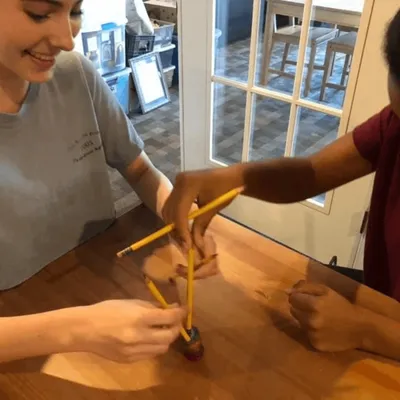
Kids go through various stages of increasing autonomy as they age. However, numerous studies have found that the stage that begins around 6th grade and continues through the teen years is unique. Unfortunately, this is what gives ‘the rebellious teenager’ an infamous bad rep. Home and street behavior are fertile ground for the flexing of […]
Tidbit # 8-How to Rest
A lot of people have written on this topic over the past 5-10 years, in particular. Major studies have been completed. The Harvard Business Review has just published an article about listening to your body and learning to relax, say no, the benefits of yoga — you know the rest. Let me start off by […]
The Physical Pain of Dysgraphia: What Parents Need to Understand
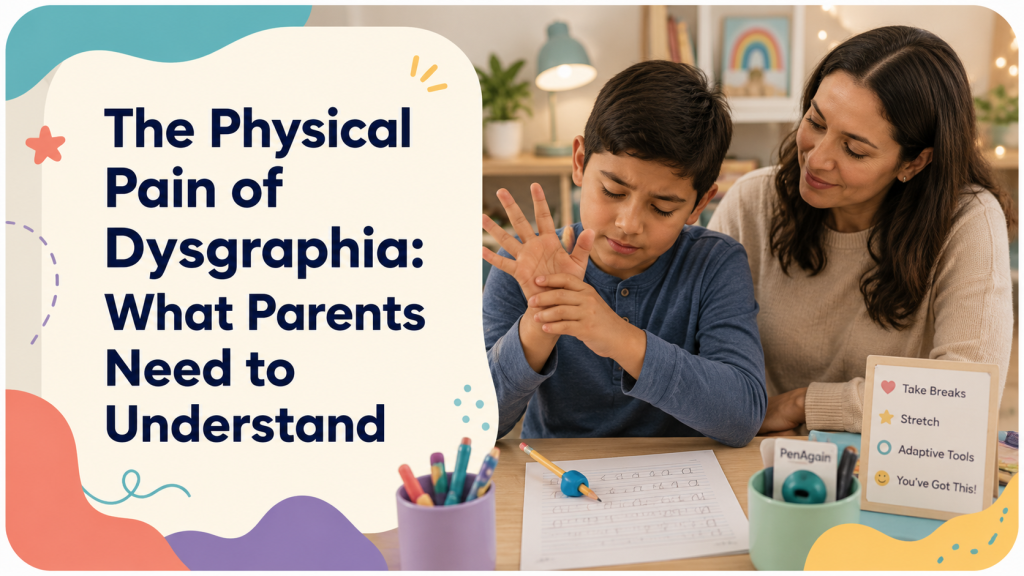
Your child closes the school laptop and walks away from an unfinished assignment again. Their hand looks tense, their shoulders are tight, and they say their fingers hurt. You have heard the school describe this as a focus issue, a motivation issue, even a behavior issue. From where you sit, none of that quite fits. […]
What Dyslexia Support Looks Like in Our Online Classrooms
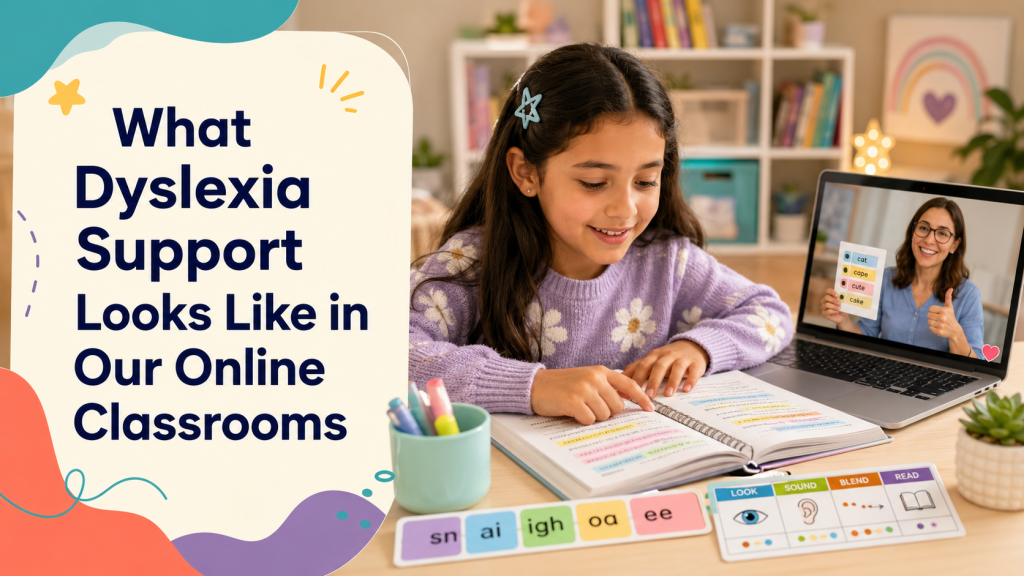
You have already done a lot of work to understand dyslexia. You know it affects how your child reads, spells, and processes language. You have read articles, talked to teachers, and maybe sat through evaluations. What you may not have seen yet is what real support actually looks like inside a daily classroom. That gap […]
Concrete-Representational-Abstract: The Best Math Approach for Dyscalculia
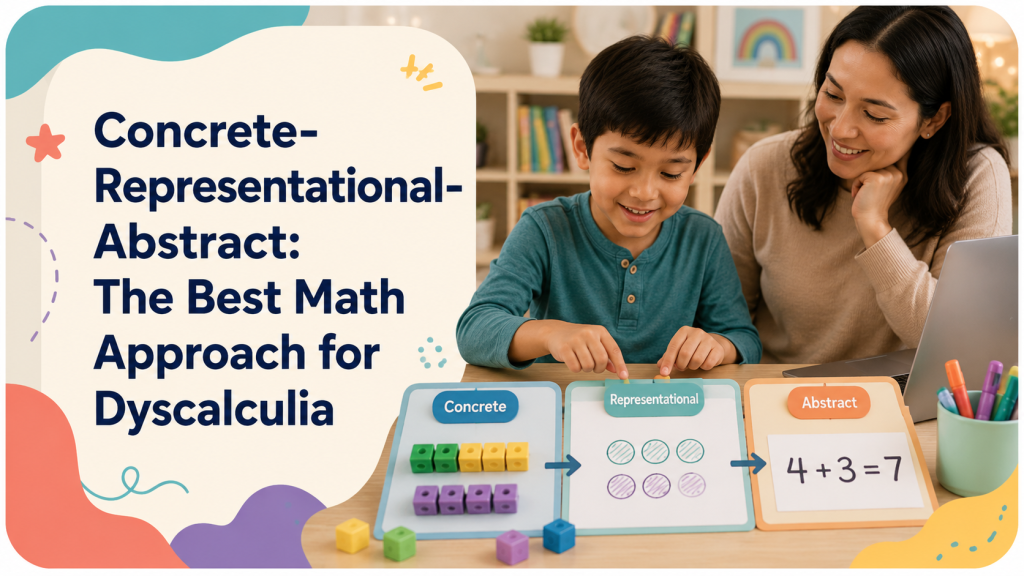
If you have started looking for math support for a child with dyscalculia, you have probably come across the phrase Concrete Representational Abstract, often shortened to CRA. School pages mention it. Tutors mention it. Articles describe it. What is often missing is a plain explanation of what it actually means and why it tends to […]
Math Anxiety vs. Dyscalculia: Identifying the Real Problem
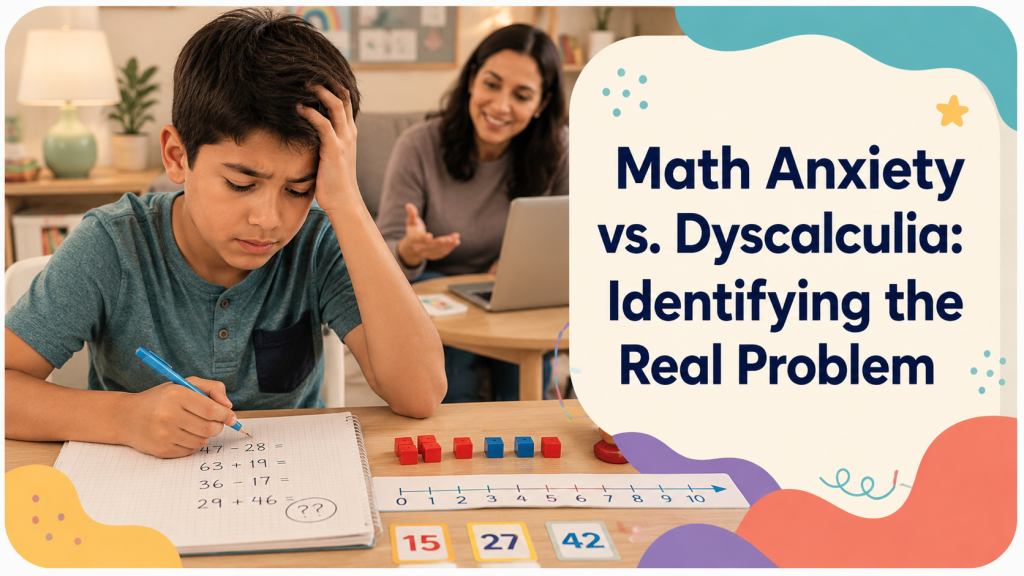
You watch your child get to a math problem and freeze. Their breathing changes. They look at the page like it might bite them. They guess at an answer that has nothing to do with the question, or they shut down completely. This has happened enough times now that the word “anxiety” has come up. […]