
When a child struggles with handwriting, parents and teachers often wonder—Is it just messy writing, or something deeper? While many students simply need more practice forming letters or spacing words, others may be facing a learning difference known as dysgraphia.
At the K–12 Dyslexia Scholars Academy, part of the Scholars Academy network of schools in North Carolina, we see this question often. Understanding the difference between dysgraphia and poor handwriting is the first step toward providing the right kind of support—and ensuring every child has the chance to thrive.

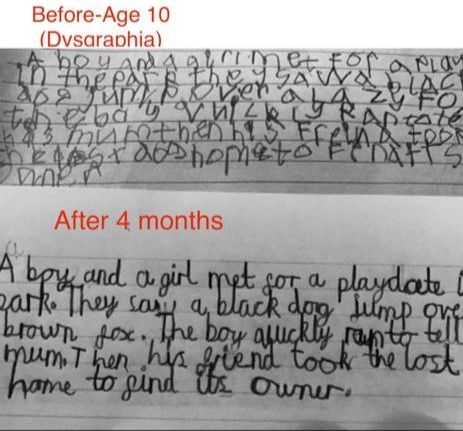
Dysgraphia is a neurological learning difference that affects the brain’s ability to translate thoughts into written words. It doesn’t reflect intelligence or effort. Instead, it impacts the process of writing—how a student holds a pencil, organizes letters, and forms coherent sentences.
Children with dysgraphia often experience:
At the K–12 Dyslexia Scholars Academy, we often remind families: Dysgraphia is not about laziness; it’s about processing. The child’s brain works differently when converting language into written form.

Now, let’s talk about plain poor handwriting. Nearly all young learners experience this at some point—especially in early elementary grades. In these cases, handwriting improves with:
The distinction lies in progress. With poor handwriting, students typically improve with repetition and time. With dysgraphia, handwriting remains inconsistent despite effort and support.
At our online school for kids with dysgraphia, teachers are trained to recognize that difference. When handwriting doesn’t respond to standard intervention, it’s a signal to explore cognitive and neurological factors instead of simply assigning more practice.
Dysgraphia extends beyond penmanship—it touches how students think, plan, and express themselves. Written assignments can become overwhelming. A student might freeze during essay writing, not because they lack understanding, but because organizing and spelling their thoughts on paper feels impossible.
In the K–12 Scholars Academy for the Gifted, we often see brilliant thinkers—students who can debate, analyze, and imagine—struggle when asked to write. Dysgraphia can mask intelligence and creativity if not properly understood. That’s why our specialized school for children with dysgraphia in NC focuses on both skill development and confidence-building.
We encourage alternate ways to demonstrate knowledge:
When students are freed from the mechanical challenges of handwriting, their true potential shines.
Research shows that dysgraphia stems from differences in neural connectivity within the brain regions responsible for writing and motor coordination. The communication between the motor cortex (movement) and the frontal lobe (language organization) is less synchronized.
In simpler terms: the brain knows what it wants to say but struggles to tell the hand how to write it.
This understanding shapes how we teach at our online school for dysgraphia in NC. Instead of pushing students through repetitive drills, we build instruction around:
It’s a science-driven, empathy-first approach that respects how each child’s brain learns best.
Parents and teachers can look for a few distinct signs:
Indicator | Poor Handwriting | Dysgraphia |
Legibility | Improves with effort | Remains inconsistent |
Speed | Normal for age | Slow, labored writing |
Letter formation | Variable, but improves | Reversed or omitted letters |
Spelling | Improves with practice | Persistently incorrect |
Written expression | Organized | Disorganized, fragmented |
Emotional response | Mild frustration | Avoidance or distress when writing |
If these patterns persist, it’s worth consulting a specialist or exploring programs designed for students with learning differences—like the K–12 Dyslexia Scholars Academy in North Carolina.
At Scholars Academy, we don’t believe in a one-size-fits-all education. Our K–12 Dyslexia Scholars Academy, a fully accredited school for kids with dysgraphia in NC, blends structured literacy instruction with creativity and emotional support.
Here’s what sets us apart:
For families in or outside North Carolina, our online school for dysgraphia in NC provides a flexible, accredited path forward.
It’s easy for children with dysgraphia to feel “behind” or “different.” That’s why emotional wellbeing is central to everything we do. Our educators focus on self-advocacy and confidence:
At the K–12 Scholars Academy of Albemarle, where many students learn in-person in North Carolina, we integrate these same values—so whether a child learns online or onsite, they feel equally supported.
When dysgraphia goes undiagnosed, students can internalize frustration as failure. But with early recognition and the right environment, those same students can flourish academically and emotionally.
Here’s how parents can help:
Whether your family prefers in-person or virtual options, our network—spanning the K–12 Scholars Academy of Albemarle and our online school for kids with dysgraphia—offers a nurturing path to success.
One of our eighth-grade students joined the K–12 Dyslexia Scholars Academy after years of frustration. He loved storytelling but dreaded writing assignments. With live, small-group classes and speech-to-text support, his written expression soared. Within months, he was writing creative essays—and enjoying it.
Stories like his remind us: when we separate handwriting from intelligence, children rediscover their voice.
Dysgraphia and poor handwriting may look similar at first glance, but they come from very different roots. One is about practice, the other about processing. And when a child’s struggle to write is rooted in dysgraphia, they need more than extra drills—they need understanding, technology, and tailored instruction.
At Scholars Academy, our mission is simple: to help every child—no matter how they learn—develop confidence, curiosity, and joy in their education.
If you’re searching for a school for children with dysgraphia in NC or an online school for dysgraphia in NC, we invite you to explore our programs and meet the teachers who believe in each student’s potential.
Together, we can move past the labels and rediscover the beauty of learning—one word, one idea, one breakthrough at a time.
Contact K–12 Dyslexia Scholars Academy or reach out to Dr. Laura Lowder and our admissions team today. Because every child deserves to see their brilliance reflected not just in their words—but in their confidence.